

Why racing from a family tent in karting matters in F4
Most drivers who reach Spanish F4 spent their karting years in big team tents — paid engineers, multiple engines, professional logistics. Alfons spent his in a family tent, with his father as mechanic and an old ambulance the family rebuilt into a motorhome.
That sounds like a story about disadvantage. It is not. It is a story about what it teaches a driver.
When you race with one engine and a chassis several years older than the field, every position has to come from the driver. There is no extra performance to find in the equipment. You learn to be smooth, you learn to overtake cleanly, you learn to make the most of every session because nothing else is going to do it for you. You also learn to keep your head when things break — like the time Alfons disassembled the engine 40 minutes before a KZ2 final in Lonato and rebuilt it in 15.
That mentality is what shows up in the F4 car. Single-seater racing is more physical, more technical and faster than karting, but the fundamentals — find the limit, stay there, do not give positions away — are the same. The years of doing it the hard way did not slow Alfons down. They built the driver.
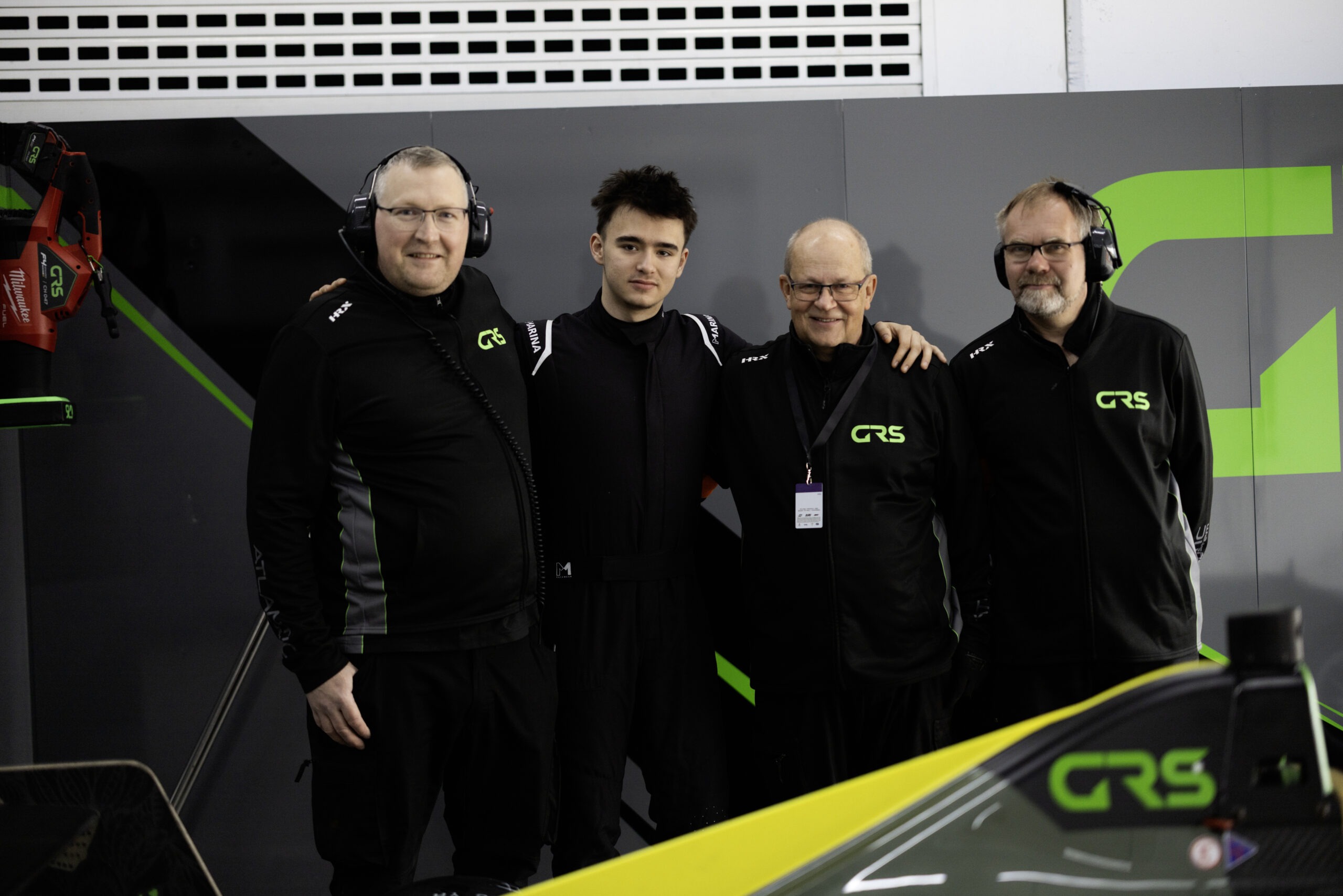
GRS Team now provides what the family team could not: an engineer, dedicated equipment, full data, professional support. The result is a driver bringing race-craft built in years of underdog racing into a category where most rookies are still learning what underdog racing even feels like.